
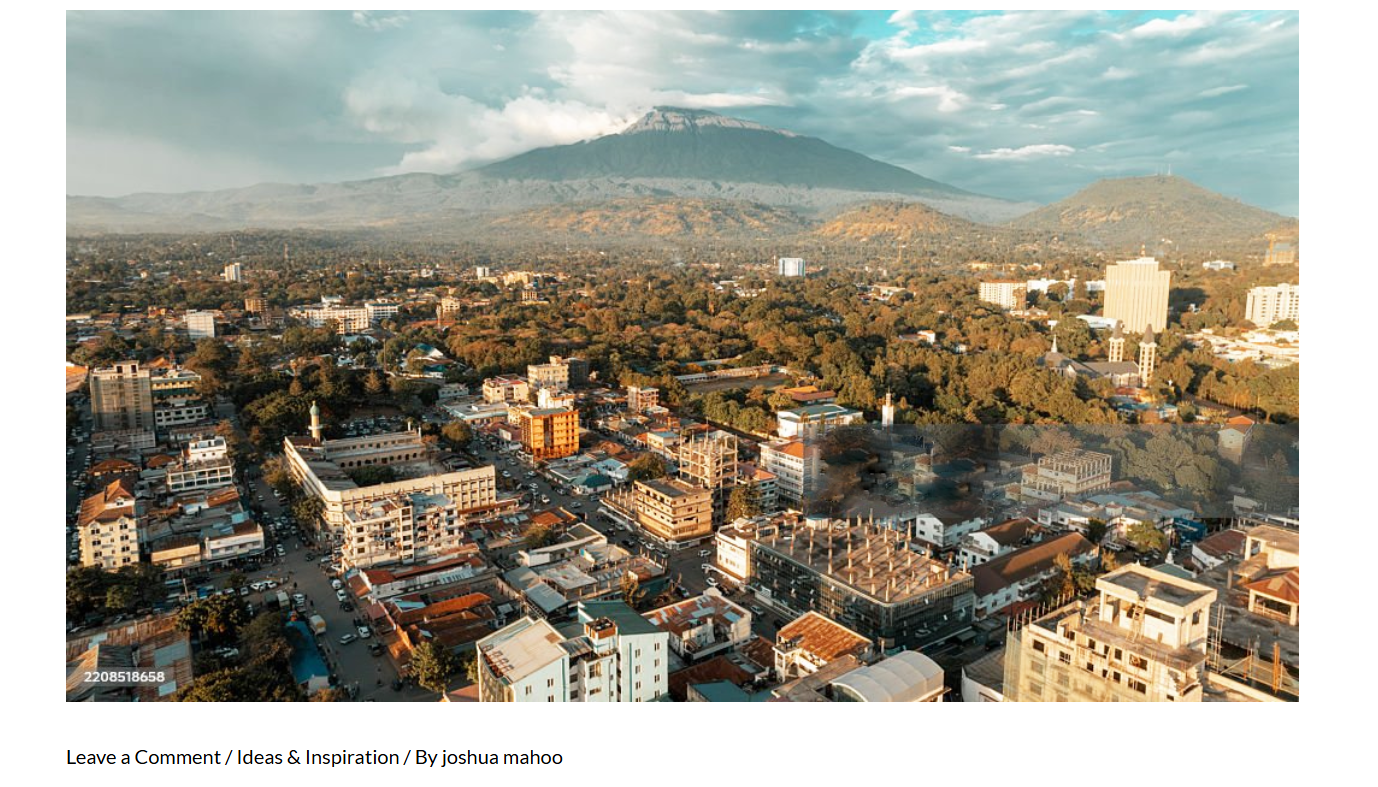
The Arusha plumbing market is characterized by a different set of dynamics that guarantee sustainable future growth. Here are the primary market growth drivers.
1. The Tourism Infrastructure
As the gateway to Mt Kilimanjaro and the Serengeti, the demand for luxury plumbing fixtures (Rain showers, free-standing tubs & high efficiency water heaters) is driven by the renovation & construction of boutique lodges and 5-star hotels.
2. Diplomatic Hub
Being the Headquarters of the East African Community (EAC) creates a consistent demand for “European –standard” “European-standard” plumbing in residential estates (like those in Njiro or Sakina), where reliability and aesthetics are prioritized over the lowest price plumbing products and fixtures.
3. Public Infrastructure
Through the Arusha Urban Water Supply and Sanitation Authority (AUWSA) and the Ministry of Water, a massive infrastructure Overhaul has been undertaken aimed at transforming Arusha into a modern, resilient urban hub. Between 2021 and 2026, the region has seen over 3.5 trillion TSH (approx. $1.3 billion USD) in development funding.
Here is a breakdown of the key infrastructure pillars:
Water Supply & Borehole Construction – The Arusha Sustainable Urban Water and Sanitation Delivery Project (ASUWSDP), largely funded by the African Development Bank (AfDB) with a budget of over $233 million, is the primary vehicle for these improvements.
- Source Diversification: The project has increased water production from 50,000 m^3/day to over 100,000 m^3/day. This was achieved by drilling over 32 new high-yield production boreholes and improving intakes at the Malala River.
- Infrastructure Expansion: The distribution network has expanded to over 840 km of pipeline, reaching previously underserved areas like Longido, Monduli, and Usa River.
- Borehole Tech: To counter power reliability issues, the government has integrated high-capacity pumping stations and generators, though solar-powered submersibles are being piloted for smaller rural clusters.
Wastewater Treatment & Collection Systems – Arusha is moving away from a reliance on septic tanks toward a centralized sewerage system, the primary aim is to mitigate the environment hazards and supporting Arusha’s rapid urban growth.
- New Treatment Plants: The construction of new waste stabilization facilities at Terrat, and the decommissioning of the older Lemara site are driven by operational constraints of the Lemara waste stabilization Ponds (WSPs), which have faced overloading due to increased wastewater flow from city expansion. Themi River protection; Overloaded ponds risk discharging poorly treated effluent into the Themi River, which leads to ecological damage and fecal contamination for downstream communities. The newly constructed Terrat facility handles significantly higher volumes, approximately 22 million liters per day, on a large uninhabited land site.
- Network Expansion and Truck lines: Over 25 km of new sewer trunk lines are being laid to serve the underserved wards like Sombetini, Sokoni 1, Engutoto, Olorien, and Kimandolu as a priority to move away from onsite sanitation. These newlines are designed with a minimum diameter of 200mm to ensure adequate flow and reduce blockages as more households connect to the system.
- CBD Upgrades: Materials and Urban Density – Within the Central Business District, older 6.1 km sections of the sewer network are being replaced with larger diameter uPVC and Ductile Iron pipes to accommodate the high-density high-rises built in the last five years. Also as a fact centralized systems are more effective than septic tanks in protecting the local water table.
Fluoride Treatment Initiatives –. Fluoride is a critical health challenge in Arusha, with levels often exceeding 13 mg/L (far above the WHO limit of 1.5 mg/L).
- Strategic Partnerships: Under the WaterWorX program (2022–2026), AUWSA has partnered with Dutch water companies (VEI) to implement pilot defluoridation plants.
- Technological Shift: The government is transitioning from traditional bone-char filters to advanced purification systems. A recent 2025 collaboration with Shinshu University (Japan) has introduced specialized fluoride-removal technology at schools (like Losinoni Secondary) and villages (Lemandá) as a blueprint for city-wide scaling.
4. Population Growth
The Central Business District (CBD) of Arusha has experienced a significant demographic shift, with the metro area population reaching approximately 600,000 in 2026, reflecting a steady annual growth rate of nearly 4%. This surge is largely fueled by natural increase and the immigration of people from neighboring regions attracted by the above mentioned conditions.
Conclusion
These utility upgrades have transformed the CBD and its immediate fringes into “high-livability” zones, acting as a primary market driver for real estate. As reliable water and sanitation become a standard rather than a luxury, there is a heightened demand for formal housing and modern apartments, particularly among the city’s expanding middle class and expatriate community. Therefore, the Arusha plumbing industry is entering a golden era of expansion.
Comments